Lucia Lee
Last update: 09/11/2025
As AI agents become more capable, managing them effectively is quickly becoming a strategic priority - not just a technical task. AgentOps provides the operational foundation businesses need to deploy, monitor, and optimize AI agents at scale. Whether you're experimenting with autonomous workflows or agentic AI integration into key processes, understanding how AgentOps works will help you maximize performance, reduce risks, and unlock real business value. In this guide, we break down what AgentOps is, how it works, and the practical benefits it brings to modern organizations. Let’s get started.
AgentOps refers to the systems, practices, and workflows used to manage AI agents throughout their entire lifecycle - from design and development to deployment and continuous improvement. It extends familiar operational disciplines like DevOps and MLOps, but applies them to autonomous AI agents that learn, adapt, and make decisions in real time.
Unlike traditional software, AI agents don’t simply follow predefined rules. They interact dynamically with users, systems, and data sources - often coordinating with other agents and adjusting behavior based on context. This flexibility is powerful, but it also introduces challenges: tracking how decisions are made, preventing unintended behavior, debugging failures, and ensuring reliability at scale.
AgentOps addresses these challenges by establishing:
Imagine rolling out an AI-driven customer support agent to streamline response times and reduce workload. Initially, it performs well. But as the business scales and the agent faces new, unpredictable scenarios, its responses start drifting - sometimes too vague, sometimes inaccurate, sometimes breaching internal rules. Without clear oversight, you can’t trace why it made certain decisions, where errors occurred, or how to correct the behavior. Now multiply that scenario across multiple systems using workflow automation, chatbots, and operational agents, and the risk compounds rapidly.
This is exactly why AgentOps is becoming essential. As organizations adopt more autonomous systems, AgentOps provides the operational backbone to ensure agents act reliably, efficiently, and in alignment with business objectives. Let’s explore the key reasons why AgentOps matters for modern organizations
Reliability and performance assurance
Autonomous agents make decisions dynamically, which means outcomes can shift as environments change. AgentOps introduces structured performance monitoring, LLM agent observability, and real-time agent performance logs to ensure consistent, explainable results. If anomalies occur, error analysis in agent systems and traceable decision paths allow failures to be identified and corrected quickly, reducing operational risk.
Coordinating complex integrations and interactions
Businesses rarely deploy a single agent. They deploy entire networks that interact with communication tools, internal services, external integration APIs, and enterprise systems such as CRMs and ERPs. AgentOps provides task orchestration and agent orchestration platforms to help manage these complex, multi-agent environments and ensure agents collaborate effectively rather than interfering with each other.

Coordinating complex integrations and interactions
Also read: Multi-agent AI system: Everything You Need To Know
Security, compliance, and risk mitigation
Without governance, agents can accidentally leak confidential data, mishandle permissions, or be manipulated through prompt attacks. AgentOps enforces security protocols, access controls, and audit trails that ensure transparent and reviewable decisions. This is increasingly critical as regulatory pressure grows, particularly in finance, healthcare, and public sector applications.
Continuous learning and adaptation
Agents evolve as data and business conditions shift. AgentOps oversees this adaptation with agent evaluation frameworks, AI agent monitoring tools, and structured feedback loops. This enables safe optimization, avoids unintentional behavior drift, and ensures agents stay aligned with business goals - forming the basis of effective agent lifecycle management and debugging autonomous agents approaches.
Cost efficiency and scalable operations
Operating AI systems at production scale requires careful resource management - especially when leveraging cloud services. AgentOps monitors resource usage and performance to maintain an efficient cost-to-outcome ratio. More importantly, it enables scalability not just in compute, but in the intelligence and autonomy of business operations across teams and regions.
AgentOps provides a structured operational workflow to ensure AI agents don’t just work, but work reliably, responsibly, and continuously improve over time. Instead of treating AI agents as a “deploy-and-forget” feature, AgentOps manages them through a lifecycle that spans from initial design to long-term optimization.
Design phase: Defining purpose and boundaries
Every effective AI agent begins with clarity. In this phase, teams define what role the agent will play, the outcomes it needs to achieve, and the limitations around what it shouldn’t do. This is where business objectives meet technical design. Product owners and engineers collaborate to map out the agent’s decision-making logic, determine how it should interact with systems or users, and set clear performance expectations.
For agents powered by large language models, this phase also includes crafting optimized prompts and guardrails to ensure responses remain consistent and aligned with real-world requirements.
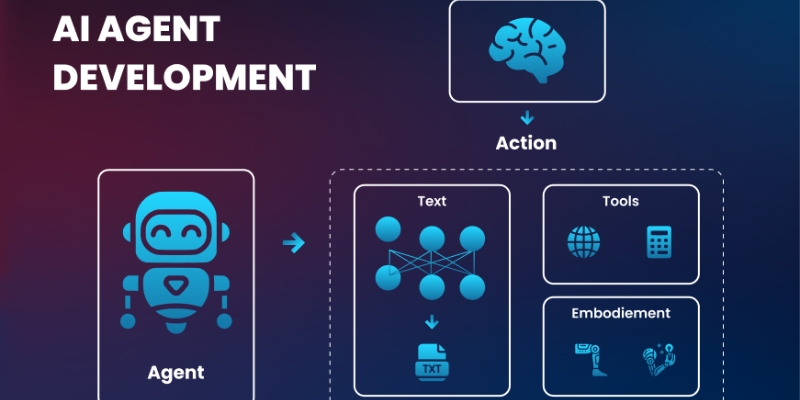
Development phase: building and validating behavior
Once the objectives are clear, the agent moves into active development. Here, it is connected to foundational models - such as GPT-based systems, Claude, or organization-specific AI models - and is equipped with the knowledge and reasoning patterns it needs to operate effectively.
The agent is tested repeatedly in controlled environments to observe how it responds across different situations. This is where validation happens: developers study its decision paths, refine its logic, and correct behaviors that don’t meet performance or safety expectations. The goal is not simply to make the agent functional - it’s to ensure it behaves predictably, transparently, and in line with its intended purpose.
Development phase
Deployment phase: operating in real-world environments
Once the agent has proven stable in testing, it is introduced into live environments. This is where real-world data, real customers, and real complexity come into play.
AgentOps ensures the agent remains observable throughout this stage, logging the decisions it makes and how it interacts with systems or users. If something unexpected occurs, safeguards and fallback mechanisms prevent errors from escalating.
The agent’s performance is continually evaluated, and insights from real interactions are fed back to the team to guide improvements. In short, deployment isn’t the end of the process - it’s where learning accelerates.
Optimization phase: Continuous refinement and evolution
AI agents are not static tools - they evolve. In this final phase, the agent is continuously refined based on performance data, feedback loops, and changing business needs. Outdated assumptions are replaced with new information, the agent’s reasoning patterns are adjusted, and new capabilities can be introduced as required. This is also where adaptive learning techniques help the agent improve over time without needing to be rebuilt from scratch. With ongoing monitoring and tuning, the agent becomes more accurate, more efficient, and more aligned with how the business operates day-to-day.
AgentOps is valuable wherever AI agents need to be developed, monitored, controlled, or improved. As organizations move from experimentation to real operational deployment of agents, AgentOps provides the visibility and governance needed to ensure agents behave reliably and align with business goals. Its use cases span development, compliance, orchestration, optimization, and cost management across the entire AI lifecycle.
Agent software development and debugging
AI agents rarely function perfectly on the first attempt. They require iterative building, testing, and refinement - much like any software product. AgentOps helps development teams trace how an agent arrives at decisions by replaying execution steps in detail, allowing engineers to pinpoint where behavior goes off track and troubleshoot logic issues. It also highlights coding problems such as recursive loops or inefficient reasoning chains that increase compute cost or slow down responses.
During version testing, teams can compare multiple agent variants side-by-side to evaluate accuracy, performance, and resource usage before selecting the best one for production. Strong version control and rollback capabilities ensure changes can be deployed safely with minimal risk.
Agent explainability and transparency
As AI systems become more autonomous, understanding why an agent made a specific decision is critical. AgentOps provides the transparency needed to analyze and interpret an agent’s reasoning patterns throughout its lifecycle. This makes it easier to identify errors or unexpected outputs, detect performance bottlenecks, and verify that the agent is operating according to intended logic.
Explainability is not only important for improving system reliability - it is also increasingly required for internal accountability and external regulatory compliance.
Compliance and security assurance
Businesses must ensure that AI systems operate in accordance with ethical standards, data protection rules, and industry regulations. AgentOps assists with compliance by capturing detailed logs of agent behavior, which can be reviewed to confirm fairness, accuracy, and safety.
It also plays a key role in protecting against security threats such as prompt injection or unintended data exposure. By continuously monitoring decision pathways and access permissions, AgentOps helps organizations maintain secure and trustworthy AI systems at scale.
AI agent orchestration across workflows
In real-world environments, AI agents rarely work in isolation. They coordinate with other agents, applications, and business systems to complete tasks. AgentOps makes these multi-agent environments manageable by observing how agents interact and how data flows across the system.
It identifies performance barriers, conflicting decision patterns, or resource inefficiencies that can disrupt workflows. With better orchestration insights, organizations can streamline agent collaboration to improve speed, reliability, and overall productivity.
Governance and continuous adaptation
As business needs evolve, AI agents need to adapt just as quickly. AgentOps supports long-term governance by analyzing activity logs, system outcomes, and user feedback to determine where agents need adjustment. This allows organizations to refine reasoning patterns, update knowledge, and even retrain or tune agent behavior without rebuilding systems from scratch. The result is an AI environment that remains aligned with current business strategy, market conditions, and operational constraints.
Cost visibility and operational efficiency
Running AI at scale can become expensive, especially when using cloud compute resources or large foundation models. AgentOps provides detailed visibility into resource usage, model consumption, and system load to help organizations control costs.
Teams can track which agents consume the most compute, identify inefficient processes, and optimize scaling strategies. By aligning performance with cost efficiency, organizations ensure AI remains sustainable and financially viable as usage increases.
While AgentOps offers a structured path to managing autonomous AI systems, implementing it effectively is far from straightforward. As organizations scale agent-based systems, several technical and operational challenges emerge that require thoughtful planning and continuous oversight.
The cost of real-time monitoring
A key value of AgentOps is observability - being able to see how agents think, decide, and act in real time. However, capturing every interaction, reasoning step, and system event generates significant data volume. Storing, processing, and analyzing these logs at scale can quickly become resource-intensive.
Teams must balance the need for transparency with the realities of cost, infrastructure capacity, and system performance. The challenge is to design monitoring approaches that deliver insight without overwhelming compute budgets or slowing down agent workflows.
Limited explainability in black-box AI
Many agents rely on complex models - particularly large language models - that inherently lack built-in interpretability. This makes it difficult to understand why an agent chose one action over another. Without structured traceability mechanisms, debugging unexpected behavior can feel fragmented and reactive.
AgentOps helps by reconstructing reasoning sequences and context variables, but achieving consistent, meaningful explainability remains a core difficulty. As agents become more adaptive and autonomous, the need for deeper transparency becomes even more critical.

Limited explainability in black-box AI
Also read: Top Agentic AI Risks Businesses Need To Navigate
Balancing autonomy and control
Organizations adopt agents to automate decisions - but full autonomy comes with risk. If agents are given too much freedom, they may take actions that diverge from policy, ethics, or business priorities. Restrict autonomy too tightly, and the system loses the very benefits of intelligent automation.
Maintaining this balance requires clear boundaries, intervention mechanisms, and well-defined operational guardrails. Striking the right level of autonomy is not a one-time decision; it must be continuously calibrated as agents learn and environments change.
Complexity in multi-agent systems
Many real-world applications involve multiple agents working together, sharing context, and coordinating tasks. In these environments, failures rarely occur in isolation. A small misunderstanding in one agent’s reasoning can produce cascading effects across the entire workflow.
Diagnosing these issues requires analyzing interactions across multiple layers - models, memory stores, decision orchestration, and external integrations. Automated root-cause analysis across these boundaries remains an evolving challenge, particularly when agent behavior exhibits emergent or unpredictable patterns.
Continuous adaptation without unintended drift
Once deployed, agents need ongoing adjustment as data changes, user expectations evolve, and business requirements shift. But tuning an agent to solve one issue may inadvertently create instability elsewhere.
Ensuring updates improve performance without introducing new problems requires careful experimentation, rollback strategies, and systemic validation. This iterative repair process is complex and demands both engineering rigor and operational discipline.
AgentOps is quickly becoming the operational backbone for organizations adopting autonomous AI. It ensures agents behave reliably, remain aligned with business goals, and continue improving over time. As AI systems grow more complex and collaborative, having a structured framework for monitoring, governance, and optimization is no longer optional - it’s essential for scaling safely and effectively.
If your business is exploring AI agents or looking to bring existing automation under clearer control, Sky Solution can help. Our agent AI solutions are built to deploy, monitor, orchestrate, and optimize intelligent agents at scale - so you can accelerate productivity while maintaining trust, compliance, and performance.
Ready to operationalize AI with confidence?
Let’s discuss how Sky Solution can support your AgentOps strategy.




.jpg&w=3840&q=75)

.jpg&w=3840&q=75)


