Lucia Lee
Last update: 21/10/2025
As the AI landscape is moving fast, businesses are no longer just asking what AI can do - they’re asking which kind of AI will drive the most value. Two terms that often come up in these conversations are generative AI and agentic AI. While both are transforming how businesses operate, they serve very different purposes. Understanding their key differences - and how each can be applied - is essential to choosing the right AI strategy for your business. Let’s dive deep into agentic AI vs generative AI!
Generative AI (gen AI) is the branch of artificial intelligence focused on creativity automation - enabling machines to produce entirely new content based on patterns learned from massive datasets. Using advanced generative models, these systems can craft human-like text, design visuals, compose music, write code, and even generate videos. Rather than simply retrieving information, they create it, drawing on what they’ve learned to generate outputs that feel both original and natural.
Agentic AI represents the next generation of AI systems - one that moves beyond task automation to autonomous execution. Instead of simply producing outputs, agentic AI systems can now think, plan, and act to achieve defined goals with minimal human input. They don’t wait for prompts - they take initiative.
At its core, agentic AI consists of self-directed AI agents capable of perceiving their environment, engaging in decision-making, and performing multi-step actions across systems and tools. Think of it as an AI workforce that not only creates strategies but also carries them out - from diagnosing problems and taking corrective actions to learning from results and refining its own performance over time.
Also read: Understanding Key Characteristics of Agentic AI
The difference between agentic AI vs generative AI goes far beyond what each system produces - it lies in how they operate, think, and interact with their environment. Let’s take a closer look at the evolution from generative AI to agentic AI.
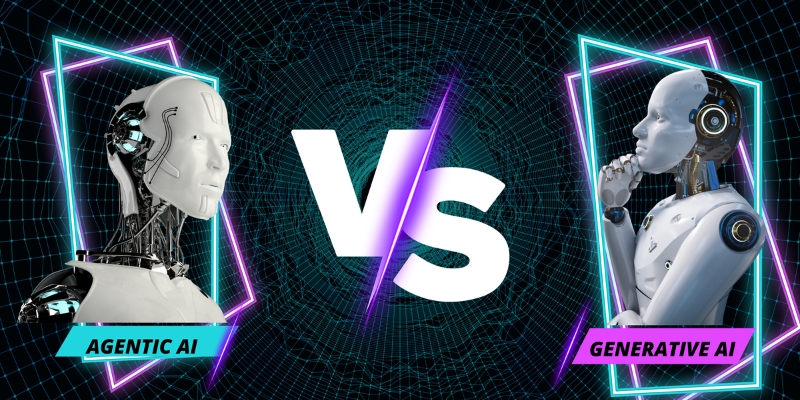
Agentic vs generative AI comparison
Core purpose
Autonomy and operation
Workflow and functionality
Adaptability and context understanding
In summary, the shift from agent-based AI vs generative AI reflects a move from AI that responds to AI that acts. Generative AI transformed how we create; agentic AI is transforming how we execute.
Now that we’ve understood the differences between agentic AI vs generative AI, let’s explore where these two technologies are making the most impact.
Marketing and sales
Generative AI empowers marketing and sales teams to work smarter and faster. It produces SEO-optimized content, social posts, and product descriptions at scale while maintaining a brand’s tone and style. Sales teams also leverage AI-driven assistants to handle lead generation, craft personalized outreach, and automate repetitive administrative tasks - so they can focus on closing deals.
Creative media and design
AI image and video generators empower teams to create professional-quality visuals, animations, and marketing assets without traditional production costs. This democratization of design unlocks new levels of creativity for non-designers and small businesses alike.

Creative media and design
Customer support and service
AI-powered chatbots and virtual agents provide 24/7 support, engaging in natural, context-aware conversations that resolve customer queries instantly. Beyond responding to questions, gen AI tools draft follow-up emails, summarize support tickets, and create knowledge base content - reducing the workload for human agents and improving service efficiency.
Also read: AI in Customer Services: The Ultimate Guide
Software development
Developers use generative AI for code generation, debugging, and writing technical documentation. Tools like GitHub Copilot and Amazon CodeWhisperer accelerate development cycles by suggesting code completions and automating repetitive tasks, allowing teams to focus on solving complex engineering challenges.
Product design and development
Product designers and engineers use gen AI to generate new design concepts based on market trends, user feedback, and material constraints. Whether creating prototypes or optimizing designs for cost efficiency, AI-driven modeling helps companies shorten development cycles and bring innovations to market faster.
Education and training
From generating study materials to providing AI-powered tutoring and grading assistance, generative AI is reshaping education. It allows educators to create personalized learning experiences while automating administrative work like writing emails or creating homework.
HR and talent management
In human resources, generative AI speeds up recruitment, onboarding, and performance management. It can screen resumes, generate personalized training materials, and even provide career development recommendations - improving efficiency across the employee lifecycle.

HR and talent management
Legal, insurance, and compliance
Generative AI assists legal teams by summarizing contracts, drafting reports, and identifying compliance risks. In insurance, it automates claims processing, risk analysis, and fraud detection - helping companies stay compliant while improving turnaround times.
Supply chain and operations
AI enhances supply chain visibility by forecasting demand, predicting risks, and generating reports from real-time data. By integrating task automation and intelligent analytics, organizations can improve operational efficiency and responsiveness to disruptions.
Synthetic data generation
Generative AI can create synthetic datasets for training, testing, and simulation - reducing dependence on sensitive or costly real-world data. This accelerates development cycles while maintaining privacy and compliance.
Marketing and sales
In marketing and sales, the distinction between how agentic AI vs generative AI are used is especially clear. Moving beyond content generative, agentic AI automates campaign management, lead nurturing, and customer segmentation. In sales, agents embedded in CRM systems can score leads, schedule follow-ups, and send tailored communications, driving productivity and conversions to the next level.
Supply chain and logistics
In supply chains, agentic AI continuously analyzes variables such as demand, weather, and supplier performance. It autonomously reroutes shipments, manages inventory, and coordinates procurement, ensuring resilience even under disruption. In logistics, it dynamically schedules fleets, predicts vehicle maintenance needs, and optimizes delivery routes to reduce costs and emissions.

Supply chain and logistics
Software development and IT operations
When it comes to agentic AI vs generative AI in software development, the latter is mainly helpful for code generation, while the former autonomously manages entire development and IT lifecycles. In testing, agentic AI systems generate, execute, and maintain tests without human input - even adapting to system updates. In IT operations, agents proactively detect anomalies, apply patches, optimize performance, and handle user support tickets through IT service management (ITSM) workflows.
Finance and banking
Financial institutions leverage agentic AI for algorithmic trading, risk management, and compliance monitoring. Agents autonomously track market data, execute trades, detect anomalies, and generate risk reports in real time. In banking, AI agents streamline loan underwriting, conduct autonomous audits, and provide AI-driven investment advice - combining speed, accuracy, and compliance.
Manufacturing and industrial operations
Agentic AI enhances operational efficiency by managing predictive maintenance and production workflows. It monitors machinery, forecasts failures, schedules repairs, and orders parts automatically, helping minimize downtime. In manufacturing, it can autonomously reorder materials, coordinate suppliers, and reconfigure production lines to meet changing demands.
Also read: Redefining Production Monitoring Using Computer Vision
Customer experience and service
Unlike traditional chatbots, agentic AI proactively engages customers, using real-time data and sentiment analysis to deliver personalized experiences. Agents anticipate customer needs, resolve common issues autonomously, and escalate complex cases when necessary.
Human resources
Agentic AI vs generative AI also show different impacts in human resources. While generative AI supports administrative tasks related to content, agentic AI simplifies the whole recruitment, onboarding, and employee support processes. For example, it screens resumes, verifies candidate data, and automates interview scheduling. Once hired, AI-driven onboarding agents tailor training plans and answer employee queries automatically.
Security and risk management
In enterprise security, agentic AI autonomously detects and mitigates cyber threats, scanning networks for anomalies and taking corrective action instantly. In risk management, agents investigate unusual transactions, flag potential fraud, and compile compliance reports - reducing manual oversight and response times.
Education and training
Education platforms are deploying agentic AI tutors capable of adaptive learning. These agents assess each learner’s knowledge, generate exercises, explain concepts, and adjust pacing automatically. They also support teachers by generating lesson materials and providing student progress insights in real time.
Agriculture and environment
In agriculture, agentic AI monitors soil and weather data to plan irrigation, fertilization, and harvesting schedules. It enables sustainable resource management, minimizing waste while improving yield. In environmental contexts, similar systems assist in disaster response by analyzing satellite and sensor data to coordinate emergency actions.
When it comes to agentic AI vs generative AI, each brings unique advantages and challenges to the table. Understanding their pros and cons is key to choosing the right approach for your goals and use cases.
Generative AI has become a game-changer for businesses - fueling creativity, speeding up workflows, and reshaping how teams create and communicate. But like any emerging technology, it brings both opportunities and challenges.
Pros of generative AI
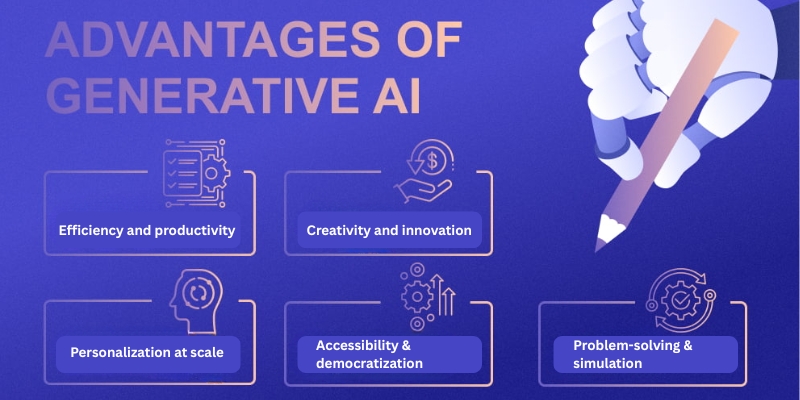
Pros of generative AI
Cons of generative AI
Agentic AI represents a new stage of intelligent automation - one where AI doesn’t just assist with outputs, but takes initiative, makes decisions, and executes tasks in real time. While the potential for transformation is immense, it also brings a unique set of risks that businesses must address thoughtfully.
Pros of agentic AI
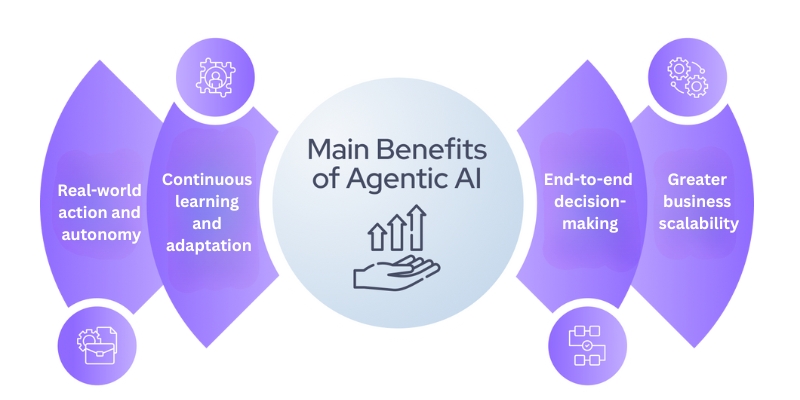
Pros of agentic AI
Cons of agentic AI
Also read: Top Agentic AI Risks Businesses Need To Navigate
The choice between agentic AI vs generative AI depends on your business objectives, the nature of your tasks, and your technical capacity. Each offers unique strengths - one excels in creative generation, the other in autonomous execution - and together, they can form a powerful AI ecosystem.
Generative AI shines in areas that rely on creativity, communication, and content creation. It’s ideal when human judgment and imagination remain at the center of your value chain.
Use generative AI when:
Generative AI is best when flexibility, creativity, and speed of deployment matter most - not when tasks demand autonomous execution.
Agentic AI is the right fit when your organization needs self-directed AI capable of taking initiative, managing workflows, and achieving defined goals. It thrives in operational environments where autonomy, scalability, and task automation matter most.
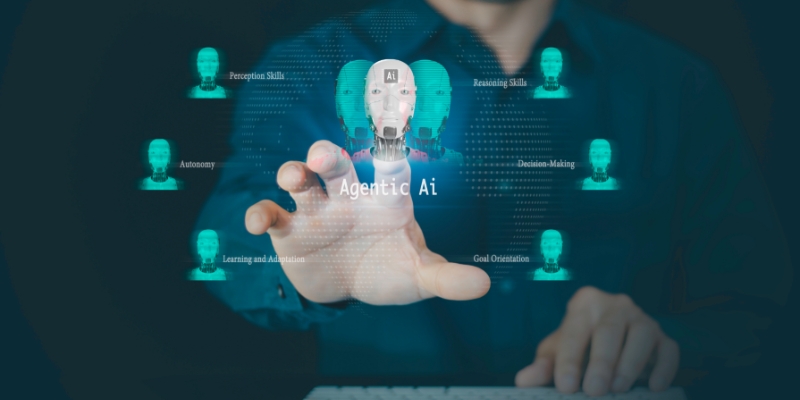
When to use agentic AI
Use agentic AI when:
Agentic AI is the choice when your goal is operational transformation, not just output generation.
While there are many differences between agentic AI vs generative AI, they are not mutually exclusive. In many cases, the most powerful strategy is to combine both. Generative AI powers creativity and communication, while Agentic AI drives execution and coordination.
For example, an agentic AI assistant could use a generative model to draft emails, summarize reports, or craft personalized updates — then autonomously send them or organize follow-up actions.
Together, they form the foundation of a hybrid AI ecosystem — one that combines creativity, intelligence, and autonomy to enhance every stage of business operation, from ideation to execution.
As AI continues to evolve, agentic AI vs generative AI are shaping the future in complementary ways - one empowers creativity and communication, while the other drives autonomy and intelligent execution.
At Sky Solution, we help organizations unlock the full potential of Agentic AI - from intelligent process automation to self-directed decision systems that deliver real results. Discover how our agentic AI solutions can transform your workflows and give your business a competitive edge today. Contact us now for a free consultation!




.jpg&w=3840&q=75)
.jpg&w=3840&q=75)