Keira Nguyen
Last update: 25/08/2025
Drones, or unmanned aerial vehicles (UAVs), have transformed industries with their versatility, and one of their most impactful uses is in surveillance. Drone applications in surveillance have revolutionized how law enforcement, private security, and industries monitor and protect assets, people, and environments. From real-time data collection to enhanced situational awareness, drones provide a cost-effective, efficient, and safe alternative to traditional surveillance methods. This blog explores how drone surveillance systems work, their applications, benefits, legal considerations, and the best surveillance drones available, along with their pricing.
Drones for security and surveillance are unmanned aerial vehicles (UAVs) designed to assist in monitoring, protecting, and managing security operations across various environments. These drones provide real-time aerial views that enhance situational awareness, allowing security personnel to monitor large areas more efficiently and safely than traditional methods. Equipped with advanced sensors such as high-resolution cameras and thermal imaging, these drones can detect movement, identify potential threats, and gather critical intelligence, even in low-visibility conditions.
They are used in diverse applications, including law enforcement, perimeter security, crowd monitoring, emergency response, infrastructure protection, and disaster assessment. By offering comprehensive data collection and rapid deployment capabilities, security drones improve response times, reduce risks to human operators, and enable cost-effective operations. Furthermore, integration with artificial intelligence enhances their ability to autonomously conduct patrols, analyze threats, and provide actionable insights, making them indispensable tools for modern security and surveillance efforts.
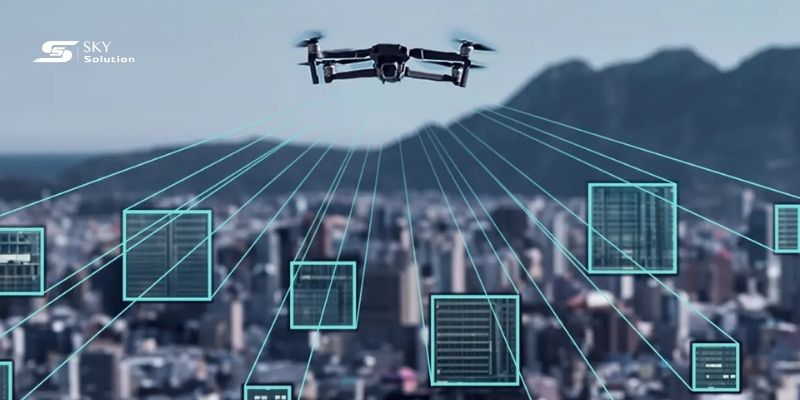
Drones for security and surveillance
Drones have emerged as transformative tools in the landscape of modern surveillance and security. They provide an elevated vantage point, real-time intelligence, and automation capabilities that traditional methods cannot match. By integrating advanced sensors, such as high-definition cameras, thermal imaging, and AI-driven analytics, drones offer unprecedented situational awareness, operational efficiency, and rapid response potential to both public and private security sectors.
Drones provide an elevated aerial perspective that significantly improves situational awareness for security operations. Their ability to cover large or inaccessible areas offers real-time intelligence that traditional ground patrols and fixed cameras cannot match. By capturing live video, thermal imaging, and other sensor data, drones help security teams detect anomalies, monitor crowds, and assess potential threats effectively.
Drones reduce the need for extensive human patrols, enhancing safety by limiting personnel exposure to dangerous environments. Autonomous flight capabilities allow continuous, fatigue-free surveillance with drones patrolling predefined routes or adapting in real-time to emerging threats. Furthermore, drone deployment lowers operational costs compared to conventional security methods, providing a rapid and scalable surveillance solution.
What are the applications of surveillance drones? Drones are used across various sectors for monitoring and security purposes, offering unparalleled access to hard-to-reach areas and real-time data. Here are some key applications:
Drones play a vital role in environmental monitoring by detecting hazards such as illegal dumping, deforestation, and wildlife poaching. Equipped with high-resolution cameras, thermal sensors, and multispectral imaging, they provide detailed maps of fragile ecosystems and habitats. Drones enable conservationists to track endangered species without disturbing them, monitor forest health, assess water quality, and gather critical data to support climate change research and pollution control. Their ability to access remote or difficult terrain makes them invaluable for real-time ecological monitoring and compliance enforcement.
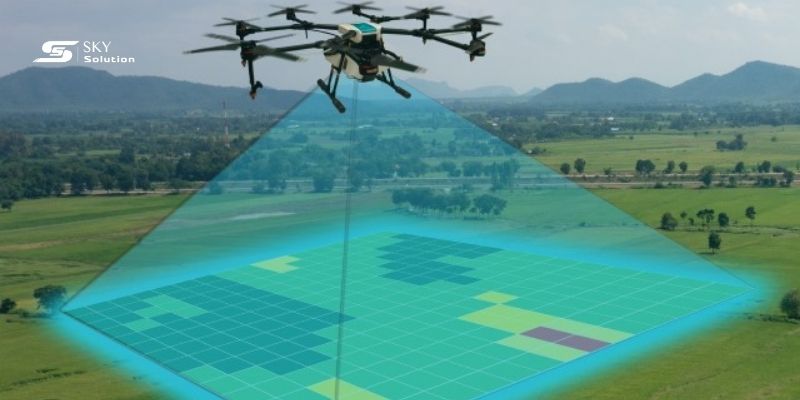
Drones for environmental monitoring
Drones offer real-time monitoring of traffic conditions, helping authorities optimize traffic flow and respond swiftly to accidents. They assist in congestion analysis by providing aerial views of roadways, identifying bottlenecks, and enabling dynamic traffic control. This capability enhances road safety, reduces incident response times, and supports urban planning for improved transportation management.
Drones are used to inspect roofs, pipelines, power lines, and other critical infrastructure within secure facilities. They detect damage, wear, or maintenance needs without putting human workers at risk, especially in hazardous or hard-to-reach areas. Regular drone inspections help prevent accidents, reduce downtime, and lower maintenance costs through early problem detection.
In environments with chemical spills, radiation leaks, or other hazardous conditions, drones assess the situation remotely to protect human responders. Equipped with sensors and cameras, they can measure contamination levels, map affected areas, and relay real-time data to safety teams. This capability ensures faster, safer incident management and containment.
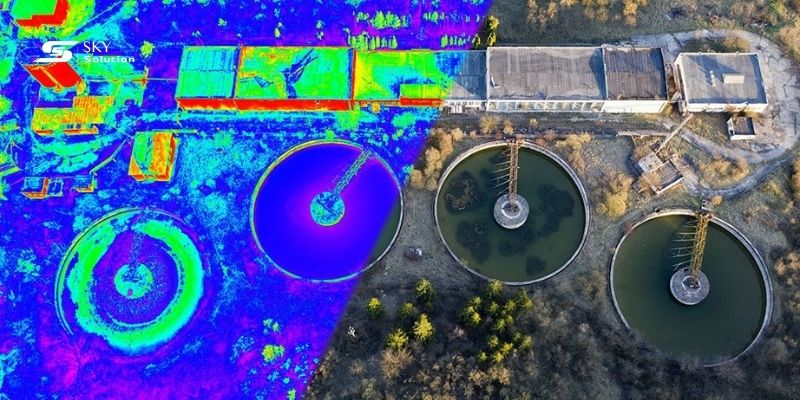
Drones can identify hazardous conditions, helping to enhance public safety
In search and rescue operations, drones expedite locating missing persons in challenging terrain or disaster-affected areas. Their ability to cover large areas quickly and use thermal imaging enhances the detection of survivors, speeding up rescue efforts while minimizing risks to responders.
Drones provide continuous surveillance across vast and remote border regions to detect illegal crossings, smuggling activities, and other security threats. Their long flight endurance and autonomous operation capabilities allow persistent monitoring, supplementing border patrol efforts while reducing personnel burden
Drones can cover vast and difficult-to-access areas efficiently, providing comprehensive surveillance that traditional methods often cannot match. This capability is particularly valuable for monitoring industrial sites, borders, large public events, and remote locations, ensuring no blind spots remain unobserved.
Equipped with high-definition cameras and sensors, drones deliver live video feeds and real-time data analytics to security personnel. This immediate information allows for swift identification of threats and faster decision-making, leading to quicker and more effective emergency responses.
Drones reduce the need for extensive human patrols, cutting labor costs while maintaining or improving surveillance quality. Compared to manned aircraft or fixed camera systems, drones are more economical to operate and maintain, offering long-term financial benefits for organizations.
By undertaking surveillance in hazardous or hard-to-reach environments, drones minimize risks to human operators. This remote monitoring capability protects security and emergency personnel from exposure to dangerous situations such as chemical spills, hostile environments, or active crime scenes.
Drones can be quickly deployed and operate in diverse environments-from urban landscapes to rugged wilderness-making them adaptable tools for a wide range of security needs. They can patrol autonomously, conduct inspections, or respond to specific incidents with ease and precision.
Modern surveillance drones integrate thermal imaging, night vision, AI-based threat detection, and autonomous flight capabilities. These technologies enhance detection capabilities regardless of lighting or weather conditions and improve accuracy by automating anomaly recognition and target tracking.
Many drones are equipped for continuous operations, including night-time monitoring through infrared and thermal sensors. This around-the-clock surveillance provides consistent security coverage without fatigue or breaks.
High-resolution imagery and video captured by drones serve as reliable documentation for investigations, legal proceedings, insurance claims, and compliance audits. Their ability to capture detailed visual evidence supports accountability and transparency.
The integration of drones into surveillance operations has fundamentally transformed how security is managed across various sectors. With their unmatched ability to provide enhanced coverage, real-time data, and rapid response capabilities, drones deliver superior situational awareness and operational efficiency compared to traditional methods. Their cost-effectiveness, versatility, and technological advancements, such as thermal imaging and AI-driven analytics, further amplify their value in keeping people and assets safe.
Moreover, drones improve safety by minimizing human exposure to perilous environments and enabling 24/7 monitoring in diverse conditions. They are indispensable for applications ranging from law enforcement and industrial security to environmental monitoring and disaster response. As regulations evolve to address privacy and ethical considerations, the role of drones in surveillance is set to expand, offering even greater capabilities for a safer, smarter, and more responsive future.
At Sky Solution, we embrace drone technology as a core element in advancing surveillance and security, delivering innovative solutions that empower businesses and communities to stay protected in an increasingly complex world.
Embracing drone technology in surveillance is not just an innovation - it's a strategic imperative for advancing modern security systems worldwide.




.jpg&w=3840&q=75)
.jpg&w=3840&q=75)
.jpg&w=3840&q=75)


