Lucia Lee
Last update: 25/11/2025
Packaging errors might seem small, but in reality, they’re costly - leading to product returns, compliance issues, and frustrated customers. As businesses push for higher quality and faster output, traditional inspection methods simply can’t keep up.
That’s where computer vision for packaging inspection steps in - offering a smarter, faster way to catch defects on the line before they ever reach your customers. In this guide, we’ll break down how it works, why it’s becoming a must-have for modern packaging lines, and what it means for operational efficiency.
Computer vision is a field of AI that enables machines to interpret and understand visual information - from images to real-time video - much like a human inspector would. By analyzing visual data with advanced algorithms, it gives machines the ability to “see,” detect patterns, and make decisions automatically.
In packaging inspection, computer vision replaces or assists human inspectors by using strategically placed cameras along the production line. These cameras capture continuous images or video, which are then processed by an edge device running trained vision models. The system can identify and classify objects, spot anomalies, and output immediate pass-or-fail decisions with high accuracy.
Modern computer vision systems rely on several key technologies:
Together, these capabilities transform packaging inspection from a manual, error-prone task into a fast, automated, and highly consistent quality-control process that helps businesses protect brand reputation, reduce waste, and ensure product integrity.
Traditional visual checks and computer vision systems may share the same objective - catch defects early - but the way they operate, scale, and deliver value is dramatically different. Below is a clearer look at how traditional methods and computer vision for packaging inspection compare.
How quickly issues are detected
Manual inspection often catches problems only after a batch has moved downstream, or worse, after products have already shipped. In contrast, computer vision provides real-time defect detection, flagging issues the moment they appear on the line.
Consistency in quality control
Human inspectors rely on concentration and judgment, both of which fluctuate throughout a shift. Computer vision systems maintain the same level of accuracy all day, identifying defects with consistent precision regardless of volume or pace.
Ability to adapt to changes
When packaging designs change or new defect types emerge, manual teams need time to retrain and adjust. Computer vision models, however, can be quickly updated or retrained, allowing production lines to pivot with minimal disruption.
Speed and operational efficiency
Manual checks slow down as tasks become repetitive or workloads increase. Computer vision, on the other hand, processes hundreds or thousands of packages per minute, enabling faster, more efficient inspection without sacrificing quality.
Depth of traceability and insight
Traditional inspections often leave gaps in documentation, making root-cause analysis difficult. Computer vision automatically logs every inspection event, creating a detailed data trail that supports audits, trend analysis, and continuous improvement.
Scalability as production grows
As output increases, human inspectors become stretched and error rates rise. Computer vision scales effortlessly, maintaining high accuracy even as throughput expands and production demands intensify.
From label accuracy to seal integrity and contamination prevention, computer vision brings together automated quality control, industrial imaging, and advanced machine learning in packaging inspection to deliver unmatched speed, precision, and consistency. Below are the most common and impactful use cases of computer vision for packaging inspection.
Label verification and print quality inspection
In high-speed packaging environments, even the smallest labeling error can lead to compliance failures, customer complaints, or costly recalls. That’s why companies are turning to automated packaging inspection with computer vision to verify labels with high granularity and reliability.
These systems use high-resolution cameras and OCR/OCV tools to handle everything from barcode and label reading to artwork verification. With precise image processing, they check label presence, orientation, print clarity, color accuracy, serial codes, and regulatory text - all in real time. Through visual inspection systems, labels are compared against master templates to confirm that every detail matches expected standards.
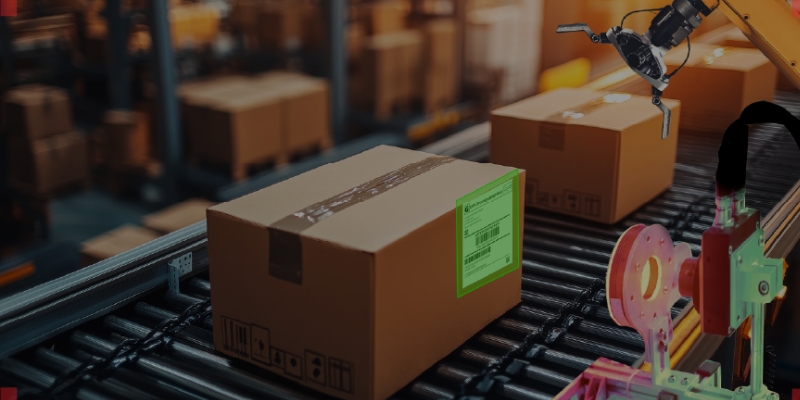
Label verification and print quality inspection
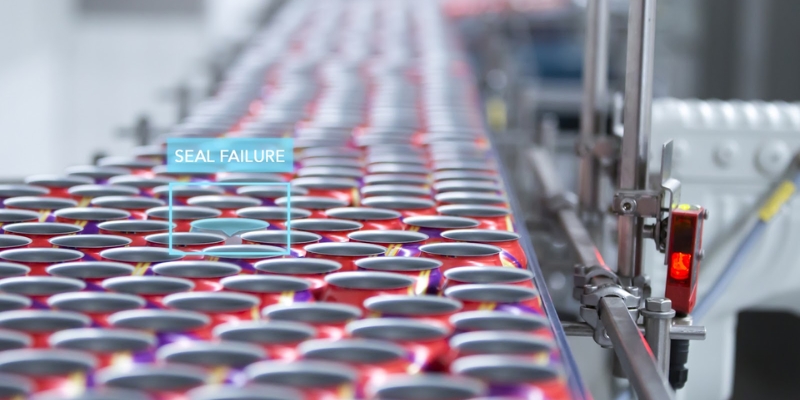
Seal integrity and lid verification
A secure seal directly affects product safety, shelf life, and regulatory compliance. Packaging defect detection with AI excels here because it can identify microscopic anomalies that humans would miss during manual checks.
Through specialized lighting and industrial imaging, these systems analyze reflective foils, transparent films, and aluminum lids - all materials notoriously difficult for traditional cameras. Advanced models detect issues like incomplete sealing, lid deformation, improper cap placement, or tamper-band misalignment. High-speed sensors perform real-time analysis so operators can intervene immediately when abnormalities arise.
Thermal seal inspection is another notable use case of computer vision for packaging inspection that takes this even further: heat patterns along seal lines reveal bonding inconsistencies, enabling the system to detect leaks or weak seals long before they escalate. This layer of manufacturing automation ensures safer products and fewer returns, while boosting overall production efficiency.
Fill level control and content verification
Fill level control balances two business-critical goals: preventing costly product giveaway and avoiding underfilled packages that lead to compliance failures. AI solutions for packaging error detection monitor liquid, powder, and solid fill levels with remarkable precision.
For transparent packaging, transmitted-light setups generate high-contrast images that clearly show actual product height versus foam or bubbles. For opaque containers, SWIR cameras create visibility where the human eye - and normal cameras - cannot. Machine learning algorithms adapt to different packaging colors, shapes, and opacities without constant reprogramming.
These systems also support product verification by checking that each package contains the right components - their presence, position, and condition. Whether it’s blister packs, medical kits, or multi-product bundles, Automated packaging inspection with computer vision ensures everything is complete, intact, and compliant with quality standards.
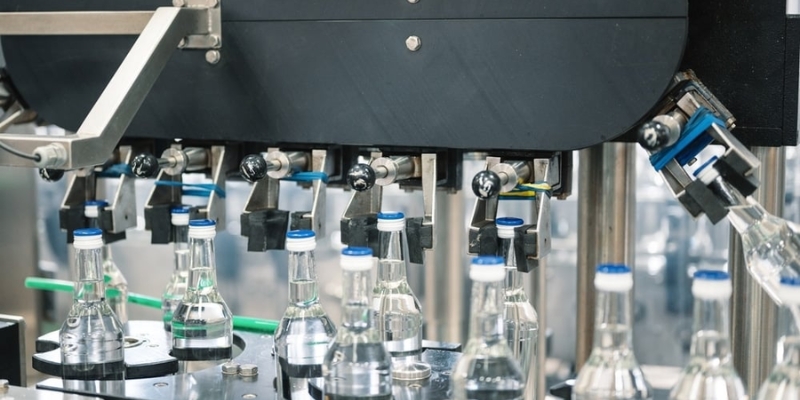
Fill level control and content verification
Code inspection and serialization verification
Barcodes, QR codes, and batch numbers are essential for traceability, logistics, and regulatory reporting. Real-time packaging quality inspection using computer vision ensures codes are readable, correctly placed, and tied to the right product.
High-speed controllers analyze each frame in milliseconds, making pass/fail decisions instantly. This is crucial for AI in packaging inspection for e-commerce, where thousands of packages move through sorting systems every minute. Machine learning models adapt to print variations and maintain high inspection accuracy even with worn, distorted, or low-contrast codes.
All results are stored with time-stamped imagery, improving audit readiness and supporting faster recall procedures when needed. These systems greatly enhance production efficiency by providing immediate feedback for line adjustments.
Physical defect detection and contamination prevention
Leveraging computer vision for packaging inspection to ensure physical integrity is not just about quality - it’s about consumer safety. Contamination detection powered by AI identifies foreign materials such as plastic fragments, metal shavings, glass pieces, or incorrect items within the packaging.
Smart cameras built for harsh environments integrate image processing and computing directly inside rugged housings. They detect scratches, dents, cracks, misaligned components, or missing parts across packages of all shapes and materials.
Deep learning models enable error reduction by recognizing natural variations between product lines and adapting without constant human input. This allows packaging teams to confidently prevent defective or unsafe products from reaching customers - especially crucial in food and pharmaceutical environments.
Package categorization for logistics efficiency
Logistics operations benefit enormously from machine learning in packaging inspection, especially when sorting and routing thousands of items per hour. Computer vision for automated packaging lines categorizes packages based on shape, size, dimensions, and visual attributes.
Cameras and sensors analyze each package, assign a route, and generate unique identifiers for automated sorting systems. With strong visual data analysis and production efficiency, misroutes and sorting errors drop significantly.
This automation brought about by computer vision for packaging inspection ensures faster delivery times and smoother warehouse workflows - a major advantage for fast-growing e-commerce brands.
Plastic packaging and shrink wrap inspection
Plastic films, shrink wraps, and web materials are prone to tearing, misprints, and sealing issues. AI-based packaging inspection systems use high-speed line-scan cameras to inspect large areas of film continuously. They catch defects like tears, print errors, weak seals, and structural inconsistencies before products move to palletization.
For content inspection through plastic, visible-wavelength cameras help when the material is transparent, while SWIR imaging reveals what’s inside opaque packaging. Combined with visual inspection systems, this ensures that both outer integrity and inner content meet quality expectations.
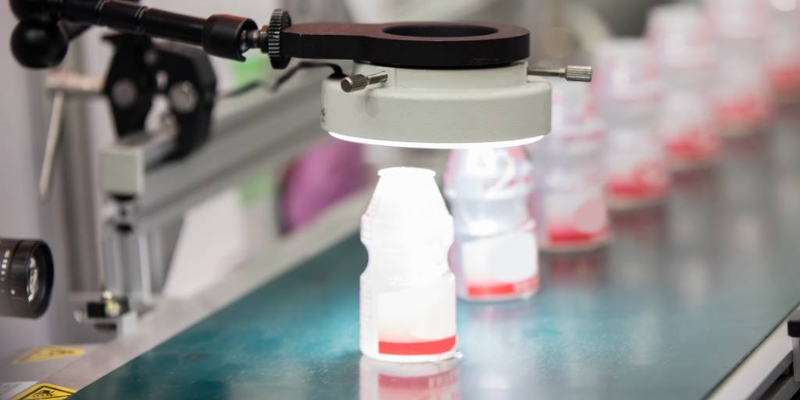
Plastic packaging and shrink wrap inspection
Container shape and geometry verification
Container deformation might seem minor, but it affects shelf presentation, transport stability, and automated line compatibility. Automated packaging inspection with computer vision measures roundness, symmetry, and structural integrity using detailed geometric analysis.
These systems inspect tin cans, jars, cartons, bottles, and boxes for warping, dents, or cracks. Defective containers are removed immediately, keeping downstream processes efficient and reducing equipment jams.
Foreign object detection
To safeguard consumer health, packaging lines use advanced industrial imaging and machine learning to detect foreign bodies in or around products. These systems capture high-definition images to identify contaminants invisible to human eyes or basic sensors.
By automating contamination detection, companies avoid recalls, protect their brand reputation, and ensure strict compliance with food and safety regulations.
Also read: Object Detection: What It Is, How It Works and Applications
When production speeds climb and customer expectations tighten, manufacturers need a quality-control system that doesn’t blink, slow down, or miss the details that matter. That’s where the benefits of computer vision in packaging quality control truly stand out - helping businesses elevate consistency, reduce risk, and protect their brand.
Superior defect detection and consistent quality
Computer vision delivers near-perfect accuracy in identifying packaging issues - from micro-scratches and dented seams to label misprints and fill-level inconsistencies. Unlike manual inspection, which varies by shift and fatigue, computer vision for packaging inspection maintains the same level of precision 24/7. This leads to stronger food safety, fewer defective products escaping into the market, and greater customer confidence.
Also read: Error-Proofing Manufacturing With Computer Vision: A 101 Guide
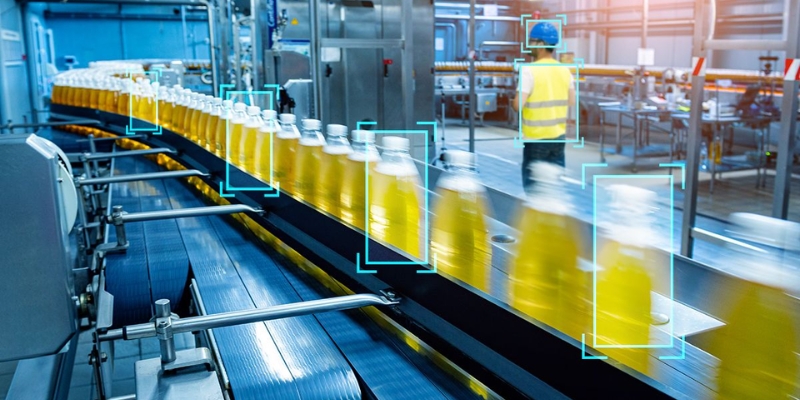
Higher efficiency with real-time, high-speed inspection
Cameras and deep-learning models can inspect thousands of units per minute without slowing down the production line. These systems perform non-contact inspections, eliminating risks of contamination or damage while keeping operations fast and uninterrupted. Plants can meet high quotas without compromising accuracy.
Higher efficiency with real-time, high-speed inspection
Reduced waste, fewer recalls, and lower costs
By catching defects early - at the exact moment they occur - computer vision helps manufacturers avoid rework, scrap, and costly recalls. Accurate fill-level validation also prevents overuse of raw materials, improving resource efficiency. In the long run, reduced manual labor, fewer defects, and more stable production cycles translate into significant cost savings.
Strengthened compliance and end-to-end traceability
Modern food and consumer-goods manufacturers face strict packaging, safety, and labeling regulations. Computer vision systems automatically verify dates, batch codes, and mandatory label information, helping avoid compliance issues. Every inspection frame is logged, creating a digital trail that simplifies audits and reinforces traceability throughout the supply chain.
Increased operational efficiency and fewer bottlenecks
Automated inspection reduces reliance on manual checks, which are time-consuming and often inconsistent. Vision systems streamline tasks like seal verification, cap alignment, label positioning, and fill-level measurement - all in real time. Operators receive immediate alerts when something drifts out of spec, enabling quick corrective action and minimizing downtime.
Stronger brand reputation and consumer trust
Reliable packaging quality directly shapes customer perception. By preventing labeling errors, underfilled containers, and visible defects from reaching store shelves, businesses protect the integrity of their brand. Consistent quality reinforces trust, especially in industries like food and beverages where packaging equals safety.
Adopting computer vision for packaging inspection can unlock huge gains in accuracy and efficiency - but it also introduces a set of technical, operational, and organizational challenges that businesses must be prepared to navigate.
High data requirements for model training
Deep learning models need large volumes of labeled images to reliably detect defects. For many manufacturers, especially those with rare or inconsistent defects, collecting and annotating enough data becomes a major bottleneck. Synthetic data and continuous retraining can help, but building a robust dataset still requires significant time and planning.
Sensitivity to environmental conditions
Lighting glare, shadows, vibrations, dust, reflective surfaces - all can disrupt image quality and reduce model accuracy. Designing the right imaging setup (custom lighting, stable mounting, appropriate optics) is often harder than it looks. Without reliable image acquisition, even the best algorithms fall short.
Sensitivity to environmental conditions
Integration with existing manufacturing systems
Computer vision doesn’t operate in isolation. It must connect seamlessly with PLCs, MES/ERP systems, robotics, and downstream automation. This level of integration takes careful engineering, standardized data flows, and ongoing coordination with production teams. As a result, deployment timelines can stretch longer than expected.
Hardware and infrastructure complexity
Effective computer vision for packaging inspection requires more than just cameras - it involves sensors, edge devices, lighting rigs, custom optics, and high-speed networking. Designing this hardware stack to match product characteristics (transparent packaging, high-speed lines, reflective materials) adds cost and engineering complexity.
Need for skilled technical talent
From setup to ongoing optimization, computer vision systems require technicians, AI engineers, data scientists, and operators who understand how to tune models, manage datasets, and interpret outputs. Many factories lack this expertise internally, making training and change management essential.
Significant upfront investment
Although long-term savings are substantial, the initial cost of cameras, compute hardware, infrastructure upgrades, and integration work can be high. For some plants, especially those with thin margins, this becomes a key barrier to adoption.
Organizational readiness and change management
Technology is only part of the transformation. Teams must trust the system, understand how to work alongside it, and adapt their processes accordingly. Successful implementations capture operator expertise, provide upskilling programs, and position computer vision as a partner - not a replacement - to human judgment.
Computer vision for packaging inspection is no longer a “nice-to-have” for modern manufacturing - it’s becoming the backbone of reliable, scalable, and high-speed packaging quality control. From catching microscopic defects to ensuring flawless compliance, it gives businesses the accuracy and visibility that manual inspection simply can’t match.
If you’re ready to bring this level of precision to your production line, Sky Solution can help. Our end-to-end computer vision solutions are built to integrate seamlessly with your operations and deliver measurable results from day one.
Reach out to Sky Solution to explore how computer vision can transform your packaging inspection process.




.jpg&w=3840&q=75)