Lucia Lee
Last update: 27/11/2025
Workplace safety isn’t just a compliance checkbox - it’s the backbone of keeping operations steady, people protected, and costs under control. Yet as facilities become more complex and production moves faster, relying solely on human supervision makes it harder to spot risks before they escalate.
That’s where computer vision for workplace safety is starting to reshape the game. In this guide, we’ll break down what it is, why it’s becoming a critical layer of modern safety strategies, and how businesses can put it to work without disrupting their existing operations.
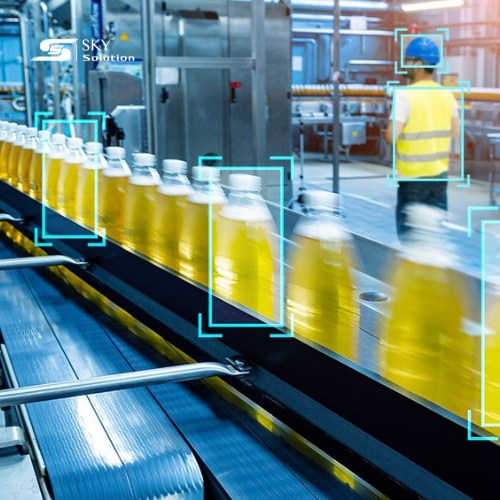
Computer vision is an AI technology that allows machines to interpret and analyze visual data - essentially giving cameras the ability to “see” and understand what’s happening in real time. In safety environments, this becomes the foundation of AI workplace safety monitoring, where cameras and algorithms work together to detect hazards, track behaviors, and support immediate decision-making.
By continuously analyzing visual data, computer vision transforms safety from reactive to preventive. Machine vision for worker protection provides early warnings before hazards escalate, and acts as an always-alert assistant that helps safety teams maintain control in complex industrial settings.
Computer vision systems follow a structured process to monitor safety conditions in real time. While the technology is sophisticated, its workflow can be understood through three core stages:
Image acquisition
Everything starts with visual data. Cameras and sensors are placed in key areas - production floors, loading zones, walkways, or around heavy machinery - to capture continuous footage of daily operations. The quality of these images is essential, especially in environments with glare, dust, shifting lighting, or fast-moving activity. Without clear visuals, no AI model can perform reliably.
Image processing
Once footage is captured, the system refines it so the AI can understand it. This step reduces noise, sharpens important features, and highlights edges or movements. Think of it as preparing the scene so the algorithms can easily pick out what matters: workers, vehicles, tools, PPE, or environmental cues.
Image analysis and interpretation
After preprocessing, the system applies machine learning models to interpret what’s happening. Here, the AI identifies objects, tracks behaviors, and checks them against safety rules - recognizing whether a worker is missing PPE, entering a restricted zone, getting too close to a forklift, or showing signs of a fall. If a risk is detected, alerts can be triggered instantly, helping teams respond before incidents escalate.
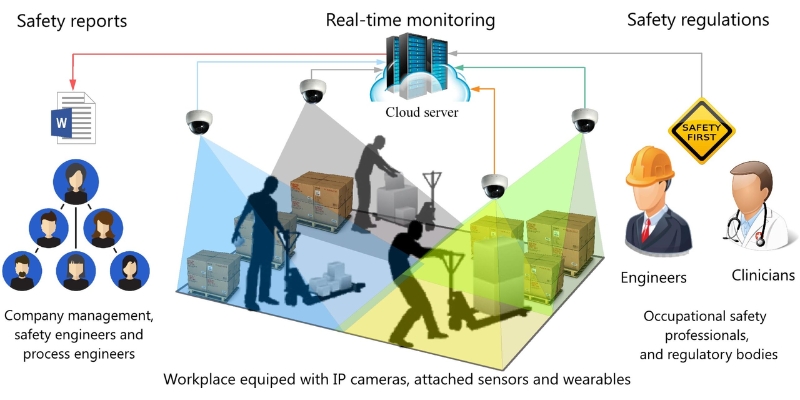
Image analysis and interpretation
Computer vision is reshaping occupational safety by turning cameras into intelligent guardians that can detect hazards, enforce protocols, and prevent incidents before they escalate. Let’s have a closer look at the use cases of computer vision for workplace safety:
Real-time hazard detection in industrial environments
In busy industrial settings, risks can appear in seconds - a chemical spill, a forklift turning a blind corner, a worker stepping into a restricted area. With computer vision for hazard detection, the workplace gains an always-on system capable of identifying threats the moment they emerge. AI-powered cameras track activity through real-time surveillance, interpreting movements and conditions through event recognition to pinpoint danger identification instantly.
When the system detects something unusual, real-time safety violation detection triggers immediate alerts. This reduces response time to near zero, allowing teams to intervene before an accident disrupts operations. As a result, companies gain a reliable, scalable layer of protection that supports both safety outcomes and productivity.
Automated PPE detection and safety protocol enforcement
Ensuring workers consistently wear helmets, vests, gloves, goggles, and other PPE is one of the most persistent challenges in occupational safety. Manual checks are limited, but automated PPE detection changes this entirely. Through personal protective equipment detection, cameras automatically verify whether each worker entering a zone meets required safety gear standards.
The system identifies missing helmets, unzipped vests, or absent gloves in real time and uses safety protocol enforcement to notify supervisors immediately. This is a core capability of vision-based safety compliance, helping organizations maintain near-perfect adherence without constant human supervision. Beyond compliance, this directly prevents injuries - stopping a non-compliant worker before they step into a hazardous environment.
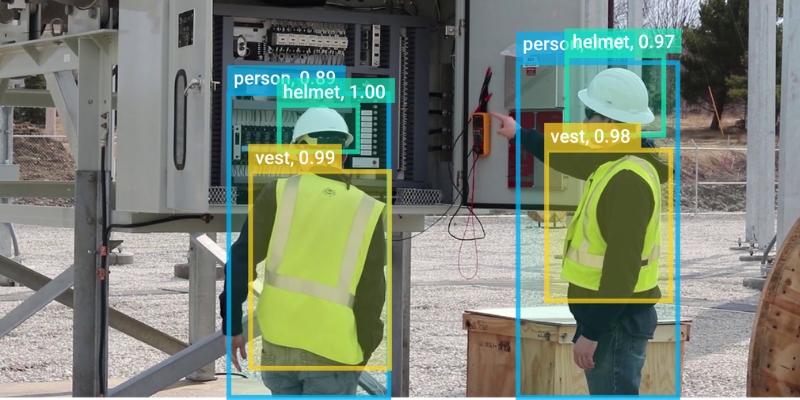
Automated PPE detection and safety protocol enforcement
Preventing accidents with instant alerts and automated interventions
Traditional safety workflows involve multiple delays: someone notices a problem, reports it, waits for approval, and then action is taken. A smart workplace safety system compresses that timeline into milliseconds. By continuously analyzing visual data, the system identifies anomalies - from wrong equipment use to unsafe body posture - and triggers automated warnings through an AI-powered safety monitoring system.
Whether it’s a slippery floor, a worker bending dangerously under load, or someone crossing into a no-go zone, proactive alerts create an immediate barrier between hazard and harmful outcome. This fusion of risk assessment, real-time detection, and instant communication shifts safety management from reactive clean-up to proactive incident prevention.
Ergonomics monitoring and behavior analysis
Musculoskeletal injuries remain among the most common workplace issues. Through behavior analysis, computer vision evaluates workers’ posture, lifting habits, repetitive movements, and motion patterns, flagging ergonomics risks long before they result in injury. The system recognizes improper lifting, awkward bending, or excessive repetition - insights that traditional supervisors can easily miss.
Through safety analytics using AI, companies can provide tailored coaching, redesign workflows, and prevent chronic issues. The result is healthier workers, reduced downtime, and a data-driven approach to long-term workforce well-being.
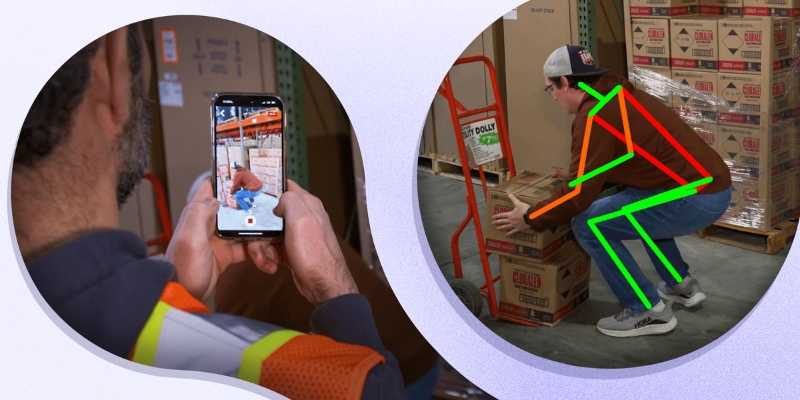
Ergonomics monitoring and behavior analysis
Machine and equipment monitoring for safer operations
Machines often show early signs of malfunction - vibrations, temperature changes, unusual motion - but humans rarely catch these subtle indicators. By combining video analytics with thermal and positional data, computer vision can monitor equipment tirelessly. If a guardrail is missing, a machine part becomes misaligned, or a worker moves too close to a hazardous zone, real-time safety violation detection activates immediately.
This reduces breakdowns, avoids injuries related to faulty machinery, and improves production continuity. For companies managing heavy equipment or automated lines, computer vision functions like an ever-vigilant maintenance assistant.
Also read: Computer Vision For Predictive Maintenance: A 101 Guide
Fall detection and elevated-work safety
Falls can be difficult to detect immediately - especially when workers are alone or in remote areas. Computer vision’s event recognition distinguishes between a worker climbing down quickly and an actual fall. Once confirmed, the smart workplace safety system alerts emergency responders or supervisors instantly, ensuring no time is lost during critical moments. This reduces emergency response time and provides reassurance for teams who frequently work at heights or along uneven terrain.
Environmental hazard monitoring
Environmental conditions such as smoke, leaks, dust buildup, or overheating equipment are often noticed too late. With continuous visual monitoring, computer vision detects subtle environmental irregularities long before they become serious threats. Whether it’s a rising heat signature, water on the floor, or early signs of electrical failure, the system flags the anomaly and triggers preventive action. This strengthens an organization’s ability to maintain safe conditions across every corner of the facility.
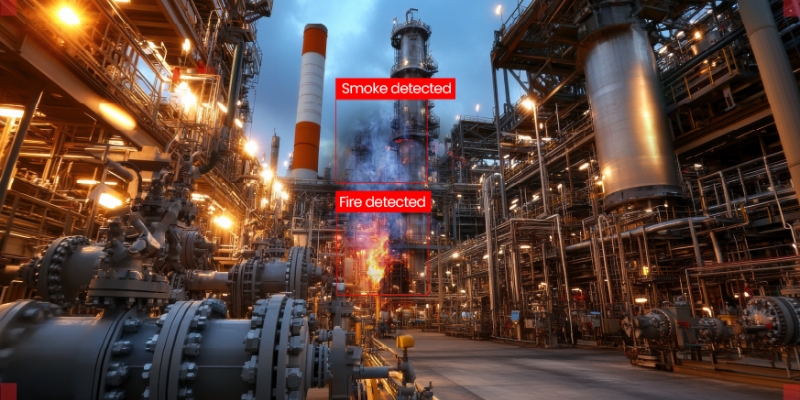
Environmental hazard monitoring
Traffic flow safety in warehouses and factories
Vehicle-human interactions are one of the biggest safety threats in logistics and manufacturing. Using AI-powered safety monitoring systems, cameras analyze traffic movement to identify near-collisions, unsafe driving, or blind-spot risks. These insights build a historical database that safety leaders can use for trend analysis and risk assessment, guiding layout adjustments or targeted training. By recognizing hazardous routes or recurring unsafe patterns, businesses prevent accidents long before they happen.
Automated inspections and documentation
Routine safety inspections are essential, but they are also time-consuming and vulnerable to human oversight. Computer vision automates these tasks, conducting automated inspections on equipment, signage, PPE, and worksite conditions. Documentation is logged automatically, creating a consistent and audit-ready safety trail.
This reduces administrative burden and ensures inspection quality never dips, even during peak operational hours.
Access control and restricted area protection
Large sites with contractors, visitors, or rotating teams often struggle with unauthorized access. Computer vision strengthens access control by verifying identity, reading badges, and tracking movement across zones. If someone enters a restricted or hazardous area without permission or protective gear, real-time safety violation detection triggers alerts. This prevents risky situations before they escalate and ensures only trained or authorized personnel can enter sensitive areas.
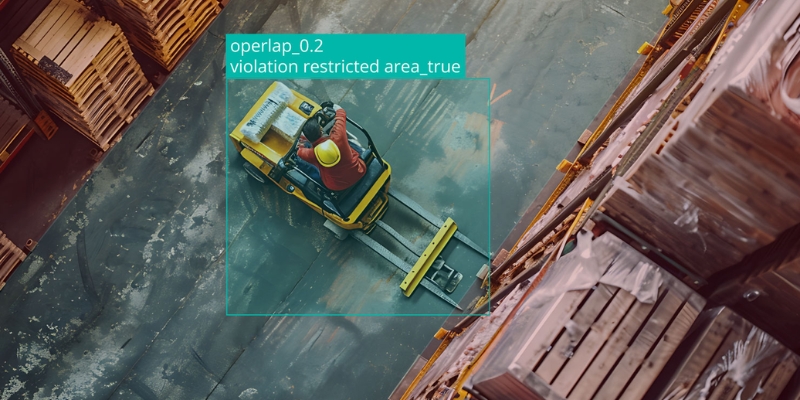
Access control and restricted area protection
Adopting computer vision for workplace safety isn’t just about adding new tech - it’s about transforming how organizations detect risks, enforce standards, and protect their people. This brings about various benefits for manufacturers and employees alike.
Continuous, 24/7 monitoring without added labor
Computer vision equips organizations with round-the-clock oversight across factories, warehouses, construction zones, and other high-risk areas - without requiring more supervisors or manual patrols. This frees safety teams from repetitive monitoring tasks so they can focus on higher-value responsibilities like strategy, training, and prevention planning.
Real-time hazard detection that prevents accidents before they escalate
Instead of discovering hazards after someone reports them, businesses gain immediate situational awareness through always-on visual monitoring. Computer vision for workplace safety instantly identifies emerging risks - from spills to unauthorized access - and alerts teams before the situation worsens.
By shortening the time between detection and intervention, companies significantly reduce accident rates and minimize the likelihood of severe injuries or operational disruptions.
Objective, consistent safety protocol enforcement
Human observations can vary from person to person, shift to shift. Computer vision delivers uniform, unbiased oversight of safety protocol enforcement, flagging violations exactly when they occur and eliminating guesswork. This ensures fairness, accuracy, and accountability across the entire workforce.
Deeper data insights for smarter decision-making
Each frame captured by a computer vision system becomes actionable data. Over time, organizations can track trends, identify recurring issues, pinpoint high-risk zones, and evaluate the effectiveness of past interventions.
Higher productivity and streamlined safety operations
Computer vision automates tasks that traditionally consumed hours - routine inspections, manual compliance checks, and incident documentation. This reduces administrative load and accelerates response times.
Workers benefit, too: clearer guidance, fewer interruptions, and faster resolution of safety concerns all contribute to a more efficient work environment where productivity isn’t compromised by preventable hazards.
Strengthened safety culture and employee trust
The presence of an intelligent, automated monitoring system reinforces safe habits naturally. With computer vision for workplace safety in place, employees become more aware of their surroundings, managers gain confidence in real-time oversight, and teams feel supported by a company that prioritizes protection over punishment. This proactive stance boosts morale, encourages responsible behavior, and deepens trust across the organization.
Significant cost savings over time
Accidents are expensive - from medical costs and downtime to regulatory penalties and reputational damage. By improving incident prevention and narrowing compliance gaps, computer vision helps organizations avoid major losses. Over months and years, these reductions compound into meaningful financial savings, delivering a strong ROI while elevating safety outcomes.
Also read: Computer Vision in Automated Quality Control: Ultimate Guide
Rolling out computer vision for workplace safety isn’t just about installing cameras - it’s about building a thoughtful, well-designed system that fits your operations, respects employee privacy, and evolves over time. A successful implementation typically follows four key steps:
Assess and plan with clarity
Every effective deployment starts with understanding what you actually need to solve. Begin by mapping out your highest-risk areas: heavy machinery zones, warehouse traffic lanes, assembly lines, elevated workstations, or places where PPE compliance tends to slip. Identify which hazards computer vision can realistically address - from detecting unsafe proximity to machines to spotting ergonomic risks or unauthorized access.
Just as important is communication. Be transparent with employees about what the technology does (and doesn’t do). Explain that the goal of computer vision for workplace safety is incident prevention, not micromanagement. Clear communication reduces privacy concerns, builds trust, and helps employees feel like partners in the safety process.
Deploy the right hardware and software
With your priorities defined, the next step is choosing and placing the technology. Install cameras in strategic, high-risk areas where visibility matters most - while ensuring they never point into private spaces like restrooms, break rooms, or designated personal areas.
Then, select a computer vision platform that can be trained or configured to detect the hazards most relevant to your operations. This might include:
Finally, integrate the system with your existing alarms, dashboards, or workflow tools so alerts reach the right people instantly. A seamless connection ensures faster responses and less manual oversight.
Protect data and safeguard privacy
A responsible implementation must address data security from day one. Start with strict access controls so only authorized personnel can view footage or sensitive information. Pair this with strong data encryption - both at rest and in transit - to prevent unauthorized access or breaches.
Depending on your policies, you may also enable privacy-preserving features such as facial blurring or identity masking. These features allow teams to analyze safety performance without exposing individual workers.
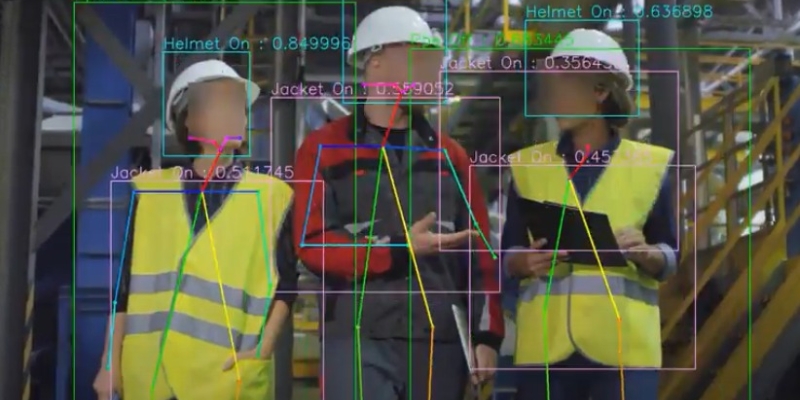
Protect data and safeguard privacy
Monitor continuously and iterate over time
Once the system is live, ongoing monitoring is where the real value emerges. Computer vision can watch your workplace 24/7 with unwavering consistency, flagging unsafe behaviors and conditions the moment they occur.
Set up real-time alerts so supervisors receive immediate notifications when the system detects a risk - whether it’s missing PPE, a spill, or entry into a hazardous zone. Use the collected data to evaluate trends, pinpoint recurring issues, and refine both your safety policies and the AI’s accuracy.
As powerful as computer vision can be in elevating workplace safety, its success ultimately depends on how thoughtfully and ethically it is implemented. Organizations must navigate the common challenges below for effective implementation of computer vision:
Safeguarding privacy and protecting visual data
Computer vision systems rely on continuous visual monitoring - which naturally raises questions about privacy. Companies must build strong data governance practices from the beginning: encrypted storage, secure transmission, strict access controls, and clear rules on how footage is used.
Transparency matters just as much as security. Employees should understand what is being captured, why it’s necessary, and how their data will be protected. Many organizations also adopt techniques like facial blurring or identity masking to further reduce exposure while still enabling accurate safety analysis.
Ensuring fairness and minimizing algorithmic bias
AI models can only be as fair as the data used to train them. If the training dataset lacks diversity - different lighting conditions, PPE variations, worker appearances, or environmental layouts - the system may perform unevenly across individuals or job sites. To mitigate bias, organizations must emphasize diverse, representative datasets, use data augmentation, and test rigorously across all worker groups. Fairness isn’t a one-time task; it requires ongoing evaluation as models adapt and new scenarios emerge.
Keeping humans in the loop for oversight and accountability
Computer vision can automate detection, but it should never replace human judgment. Workers, supervisors, and safety teams must remain at the center of decision-making. Organizations should establish clear protocols on how alerts are triaged, who reviews them, and when human intervention is required. This prevents over-reliance on automation and ensures that final decisions affecting worker safety, performance, or compliance are made by trained professionals.
Managing technical challenges and PPE variability
One of the overlooked complexities of computer vision for workplace safety is the vast range of PPE designs, shapes, colors, and materials. Training a model to accurately identify all variations - especially in dynamic settings with motion blur, shadows, occlusion, or low-visibility conditions - is challenging. Companies can improve accuracy by collecting diverse datasets, generating synthetic training images, and positioning cameras to capture angles where occlusion is minimal. This groundwork helps the system perform reliably even in tough environments.
Scaling, maintaining, and adapting the system over time
Deploying computer vision across multiple sites introduces additional complexity. Every facility has different layouts, lighting conditions, PPE rules, and workflow patterns, meaning models must be tuned for each environment. Regular updates, retraining with new data, and modular system architectures help organizations scale efficiently. APIs and flexible integrations ensure the system aligns with evolving safety standards, new equipment, or updated compliance frameworks.
Committing to continuous improvement
Workplaces change - and so should safety technology. A responsible deployment includes ongoing monitoring, periodic accuracy checks, and refinement of detection models based on real-world performance. As safety protocols evolve and new risks emerge, the system must adapt accordingly. Continuous improvement ensures the technology remains relevant, accurate, and aligned with the organization’s long-term safety strategy.
Computer vision is quickly becoming one of the most practical, scalable ways for organizations to strengthen safety culture, reduce risk, and support frontline teams. Companies that move early not only improve worker safety compliance and operational resilience but also build workplaces where employees genuinely feel protected.
If you're ready to explore how computer vision can elevate safety in your facilities, Sky Solution can help. Our computer vision solutions are designed to fit real-world environments, integrate seamlessly with your existing systems, and deliver actionable insights from day one. Contact us now for a free consultation on how we can help you bring safer, smarter operations to life.




.jpg&w=3840&q=75)
.jpg&w=3840&q=75)